From chestnut to flour: traditional know-how
The origins of chestnut flour: a need for preservation
The centuries-old chestnut groves in Corsica's mid-altitude mountains produce an abundance of this nutty fruit every autumn, in the space of a month. As the quality of the chestnuts declines in the days following harvest, they are processed into flour as a means of preserving this precious resource.
Chestnut flour plays an important role in Corsican gastronomy, as part of an ancestral know-how. Each stage requires special attention to ensure that the flour is fine, lump-free, tasty and sweet. Chestnut flour is a 100% natural, gluten-free product.
But before being transformed into flour, we need to look at the fruit itself, the chestnut, which has its own history in the island's diet. To find out more about this emblematic fruit, read our article on Corsican chestnuts.
First step: Harvesting the chestnuts
Chestnut flour production begins in autumn, in mid-October, when the first fruits fall naturally from the tree, some still in their bogue. In Corsica's chestnut groves, chestnut growers are hard at work gathering the precious fruit before it gets damp on autumn nights, or is eaten by wild boar and cows.
Chestnuts are harvested by hand, or using nets set up at the foot of the trees. It lasts about a month. After that, between mid-November and early December, there are still a few well-hidden fruits, but their quality is no longer optimal.
Chestnut drying, the key to good preservation
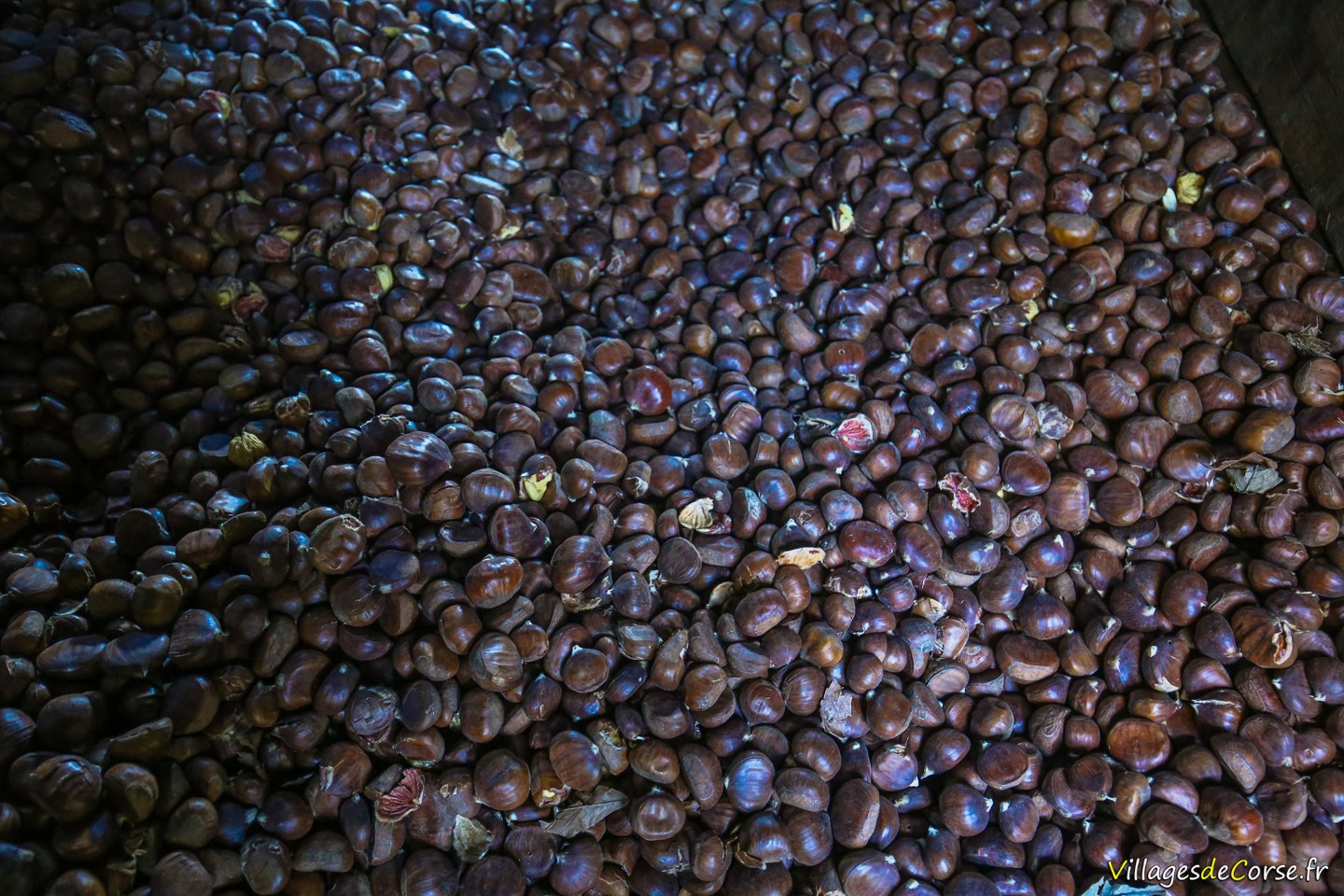
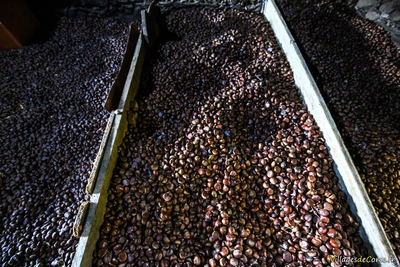
Freshly harvested, chestnuts are immediately stored in a traditional dryer called a seccatoghju, to evacuate moisture and reduce the risk of spoilage. They are compartmentalized with boards, to separate the different harvests, which are spaced out over time.
A wood-burning stove underneath these open-floor attics provides continuous heat for three weeks, 24 hours a day. As wood fire is the best source of heat for expelling humidity, chestnut wood is also used for its good fuel properties.
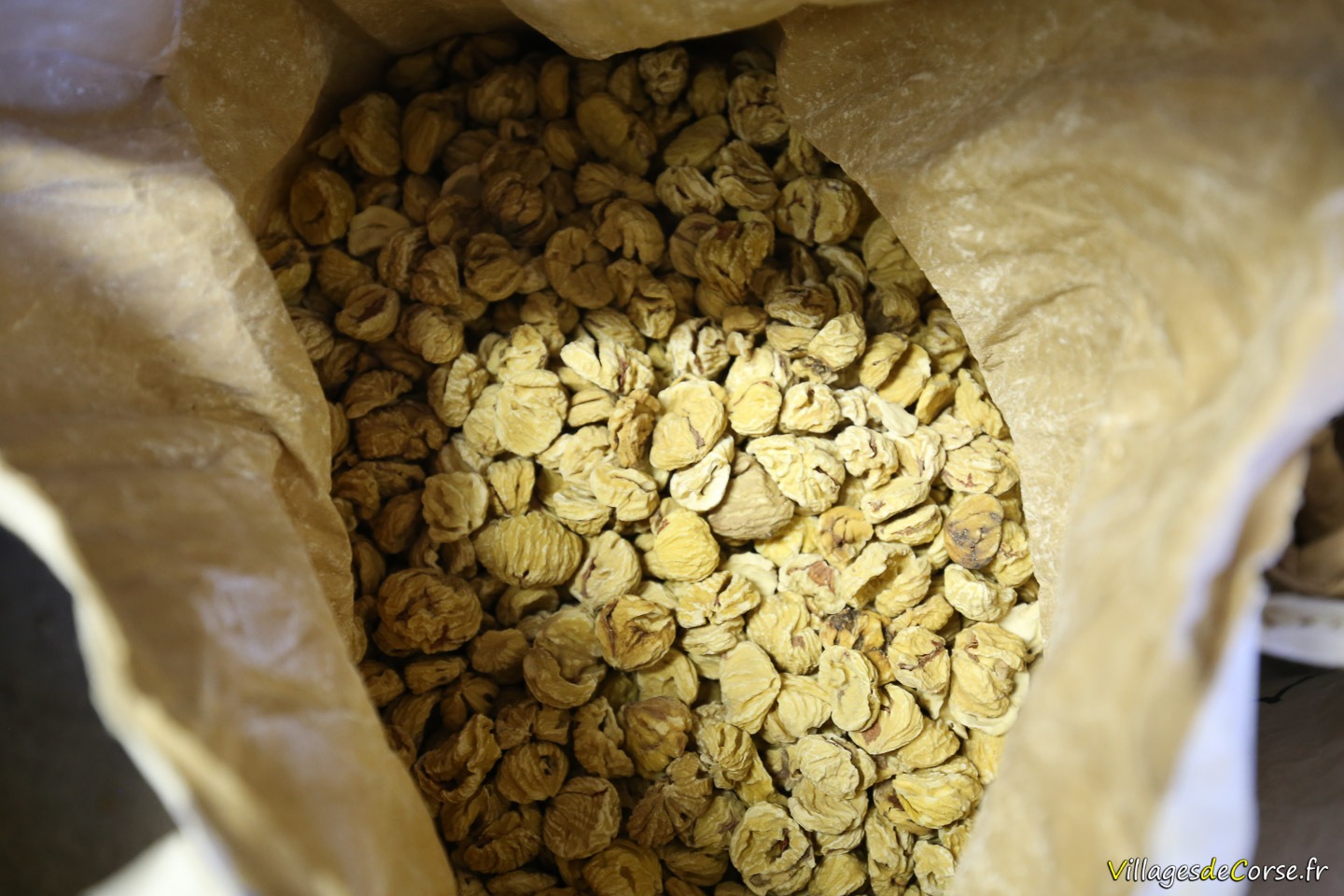
The gentle, constant heat gradually dehydrates the fruit, removing all traces of moisture. This stage is essential, as chestnut flour is particularly sensitive to humidity. The chestnuts in the dryer are regularly stirred to ensure optimal drying.
Chestnut shelling and sorting
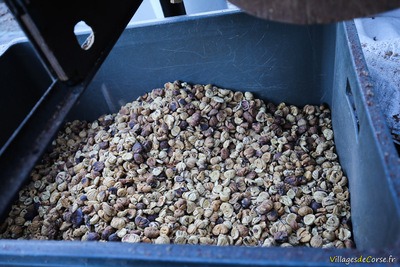
Once drying is complete, the chestnuts must be stripped of their bark. This operation is facilitated by the removal of the skin from the fruit, which shrinks as it loses water.
Today, this operation can be carried out using hulling machines, or as in the past, dried chestnuts can be placed in canvas bags, which are beaten against the ground or a stone to break the lighter skin, which is then blown off.
The chestnuts are then sorted by hand, to eliminate any damaged or unfit fruit. This is one of the most fastidious operations, requiring a great deal of patience. It takes around 3 kilos of dried chestnuts to produce 1kg of chestnut flour.
Grinding at the mill
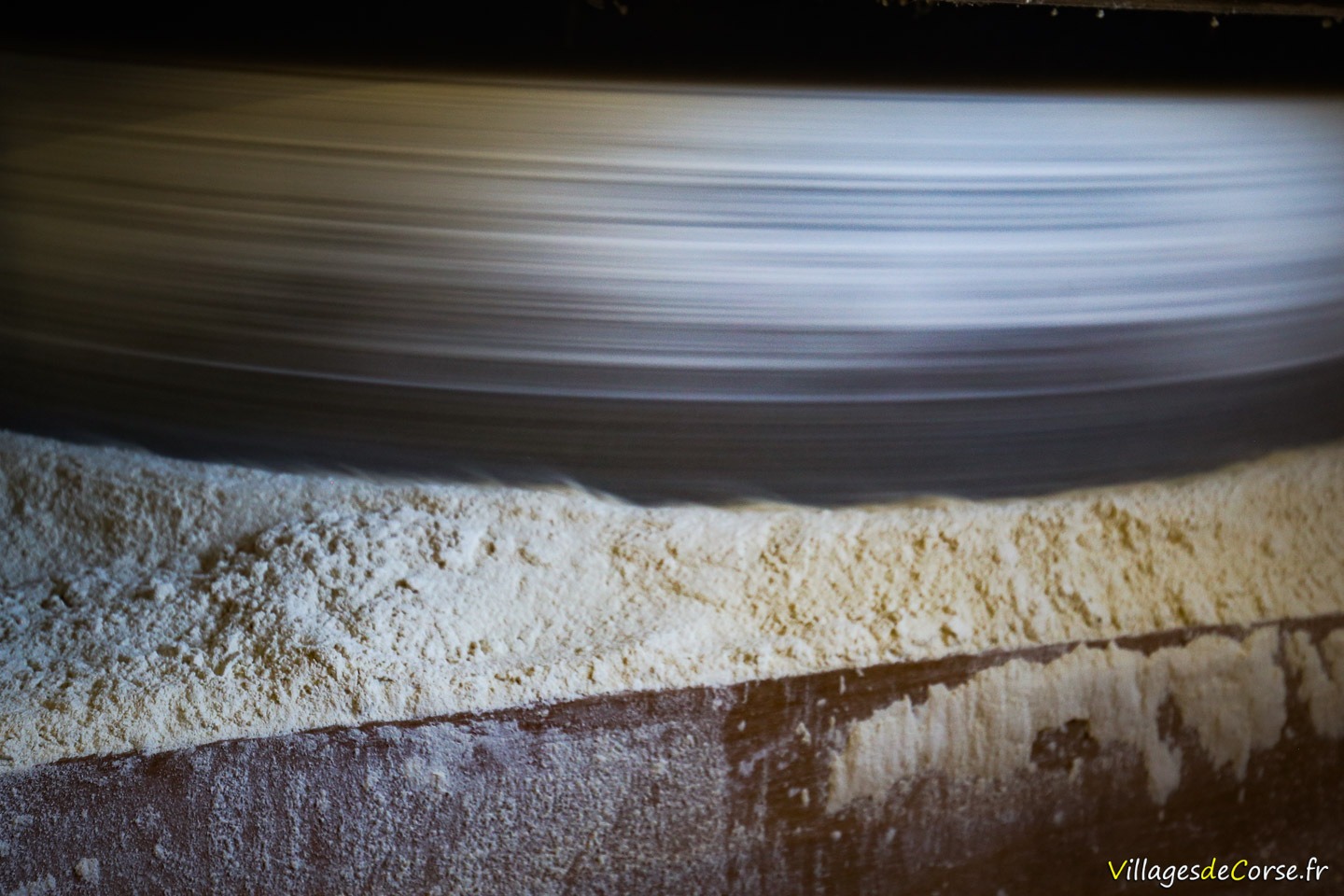
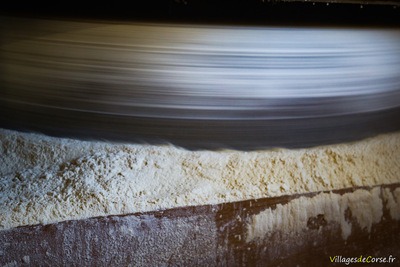
The dried fruit is then ground in a chestnut mill, usually equipped with stone or granite millstones. The grinding process produces a fine, homogeneous flour, characterized by its light color and naturally sweet taste. It is at its best when it leaves the mill.
As with drying, this stage is carried out in a dry, heated environment to avoid any moisture build-up. Humidity levels must be monitored at all times.
Vacuum-packed in 1kg bags
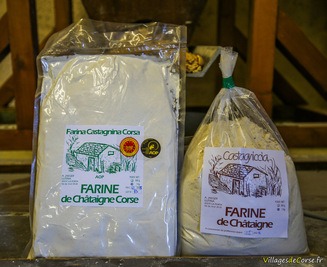
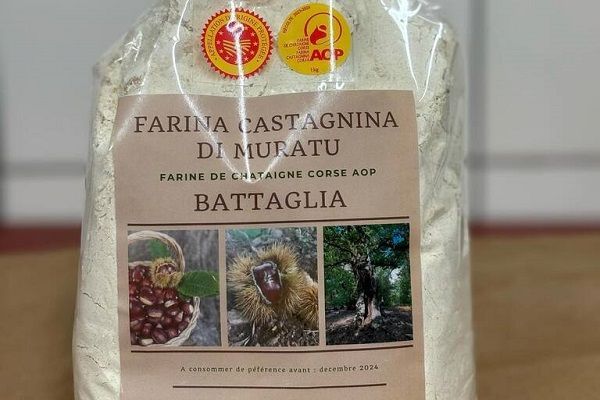
Once ground, chestnut flour is packaged in one-kilogram plastic bags. Some producers also offer 500g bags.
Preservation over time
Chestnut flour can be stored for up to 6 months, away from light and in a dry place. Vacuum-packing extends shelf life to 1 year. Some people also choose to freeze flour to preserve its qualities even longer.
Average price of a kilo of chestnut flour
On the island as a whole, prices are around €20 per kilo from the producer, and 22 to 25kg in grocery stores and other shops.
The nutritional benefits of chestnut flour
Chestnut flour has many nutritional qualities that explain its success in the modern diet. First and foremost, it is naturally gluten-free, making it an interesting alternative to wheat flour for those intolerant to gluten or wishing to diversify their diet.
It also has a relatively low glycemic index and provides complex carbohydrates while making you feel fuller more quickly than other flours, making it a popular choice for athletes and people concerned with a balanced diet.
Rich in fiber and minerals, it also offers a mild, slightly sweet taste that is much sought-after in many culinary preparations.
How to use chestnut flour in cooking
Chestnut flour can be used on its own or mixed with other flours to prepare desserts such as chestnut cakes, cookies, canistrelli, flans or crêpes. It can also be used to sprinkle on soup. Its characteristic fragrance lends a mild, slightly sweet flavor to preparations. Traditional pulenta is made from chestnut flour, water and salt, heated and mixed to a homogeneous paste.
Chestnut flour producers in Corsica
A number of the island's castaneiculturists and craftsmen now perpetuate this traditional know-how by transforming the chestnuts from their orchards into flour.
Below is a selection of producers of chestnut flour in Corsica, who cultivate their own chestnut groves and carry out the various stages of production themselves.