- Articles
- Fauna and Flora
- Forest
- Chestnut
The Corsican chestnut: a symbol of autumn and island gastronomy
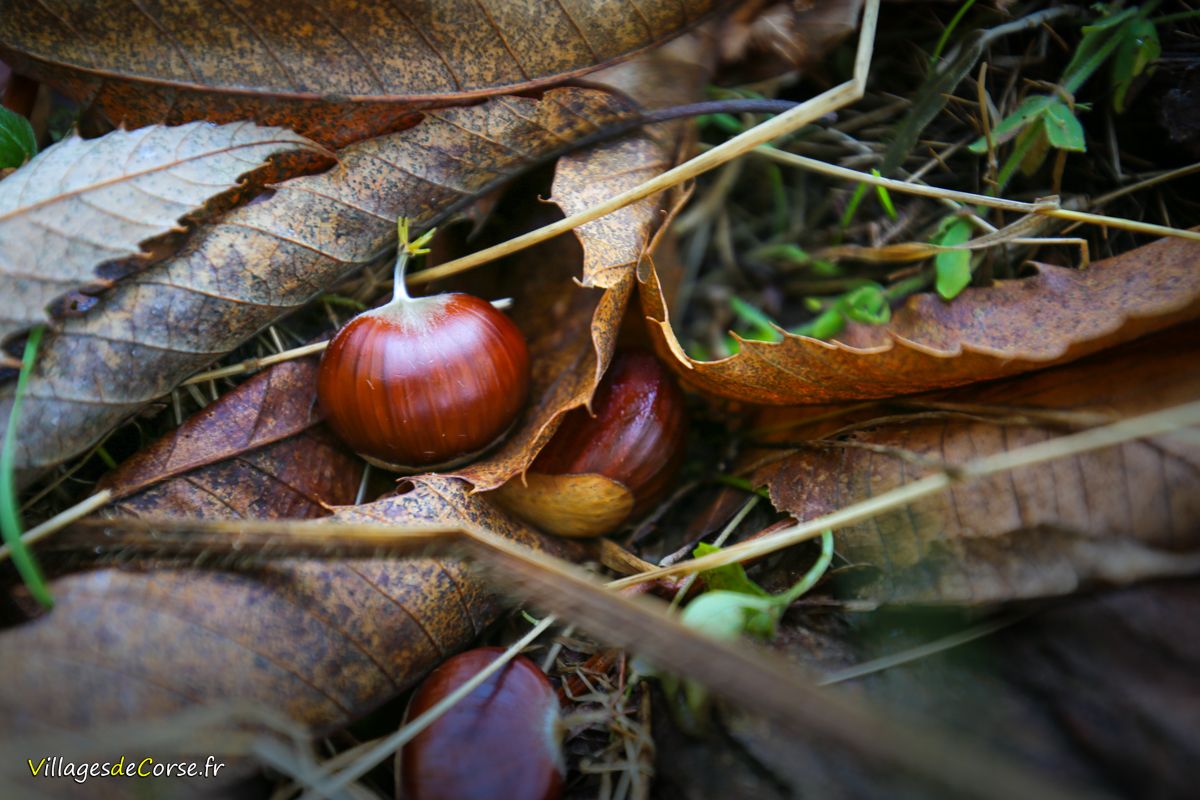
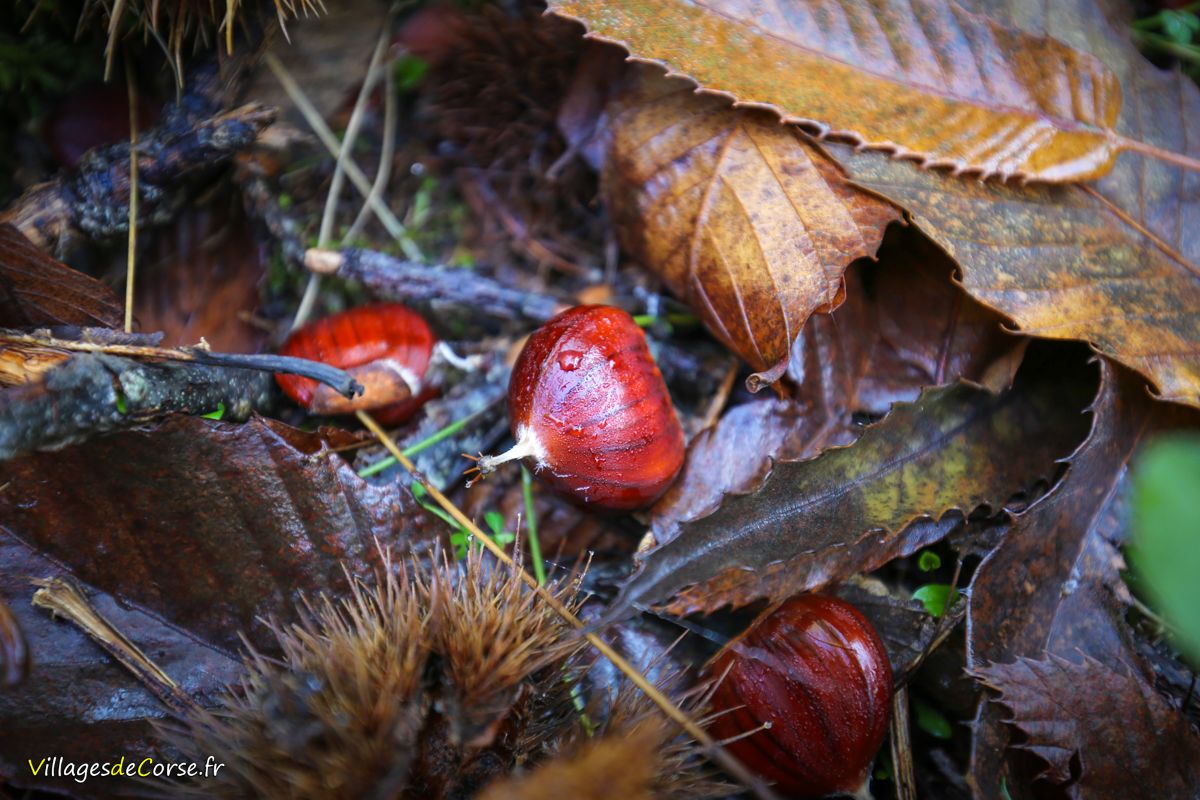
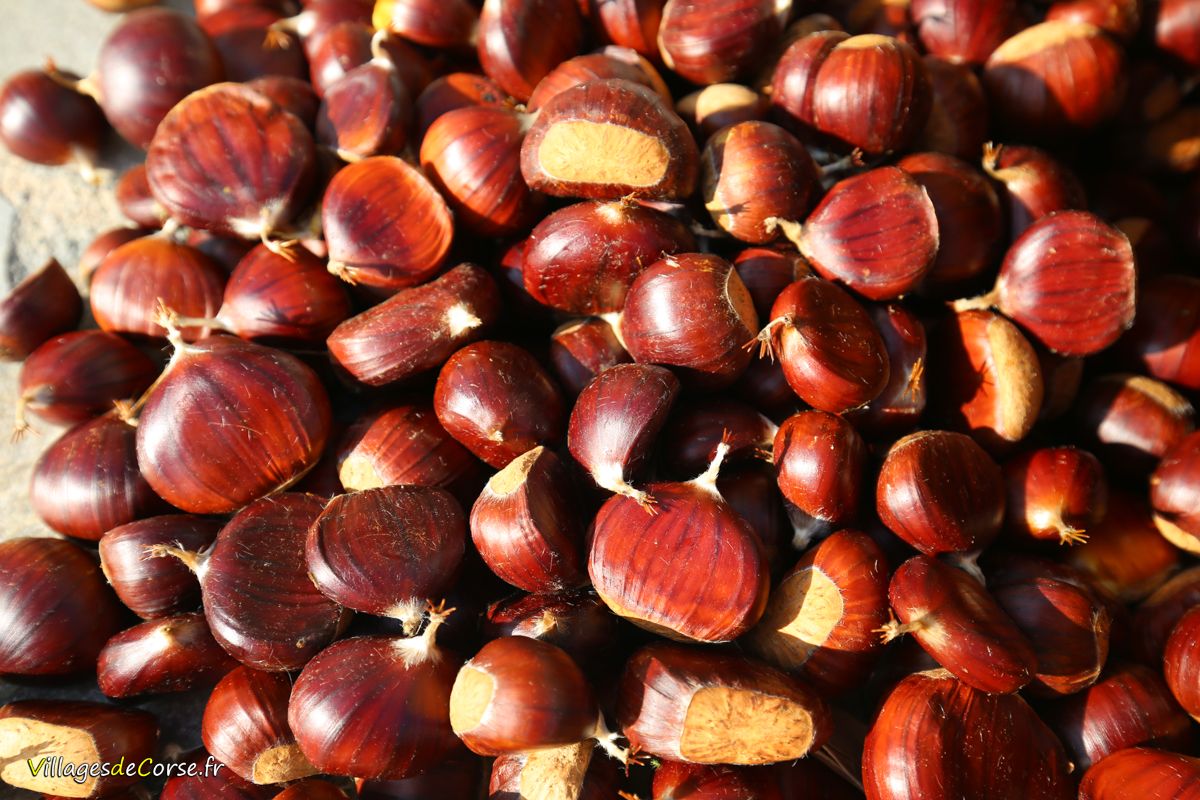
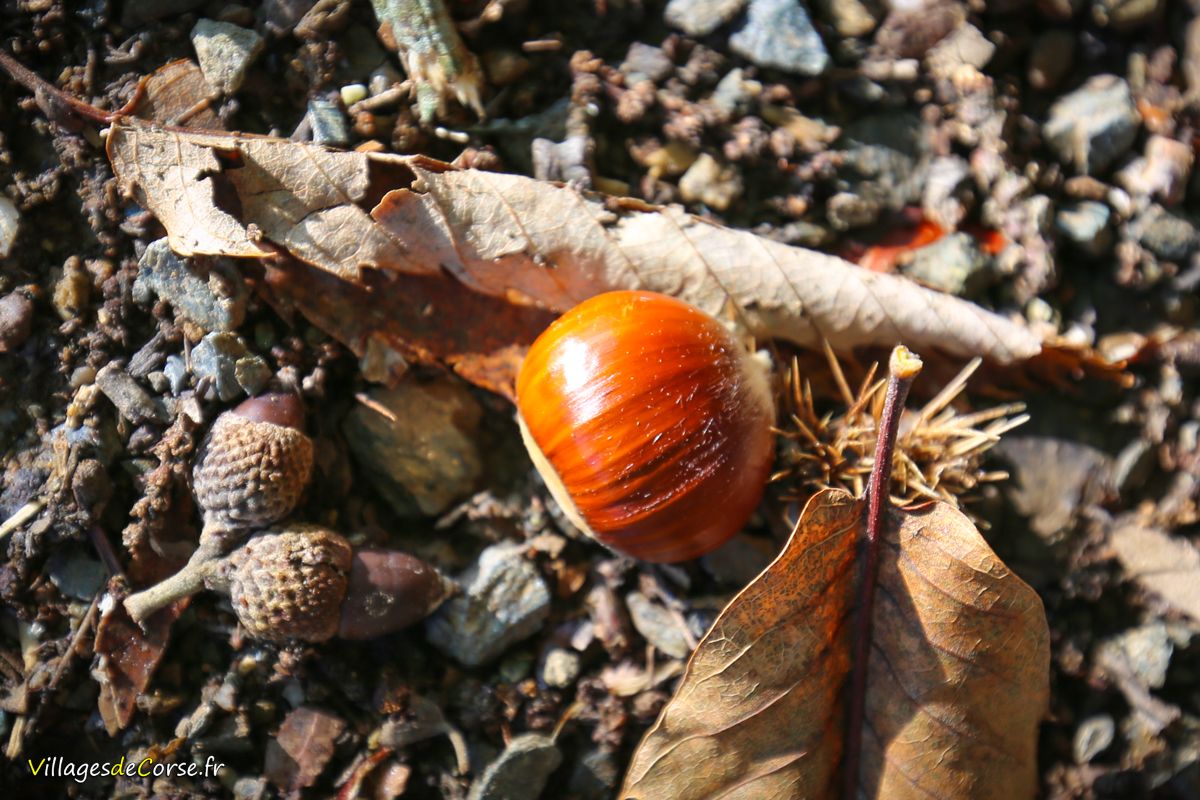
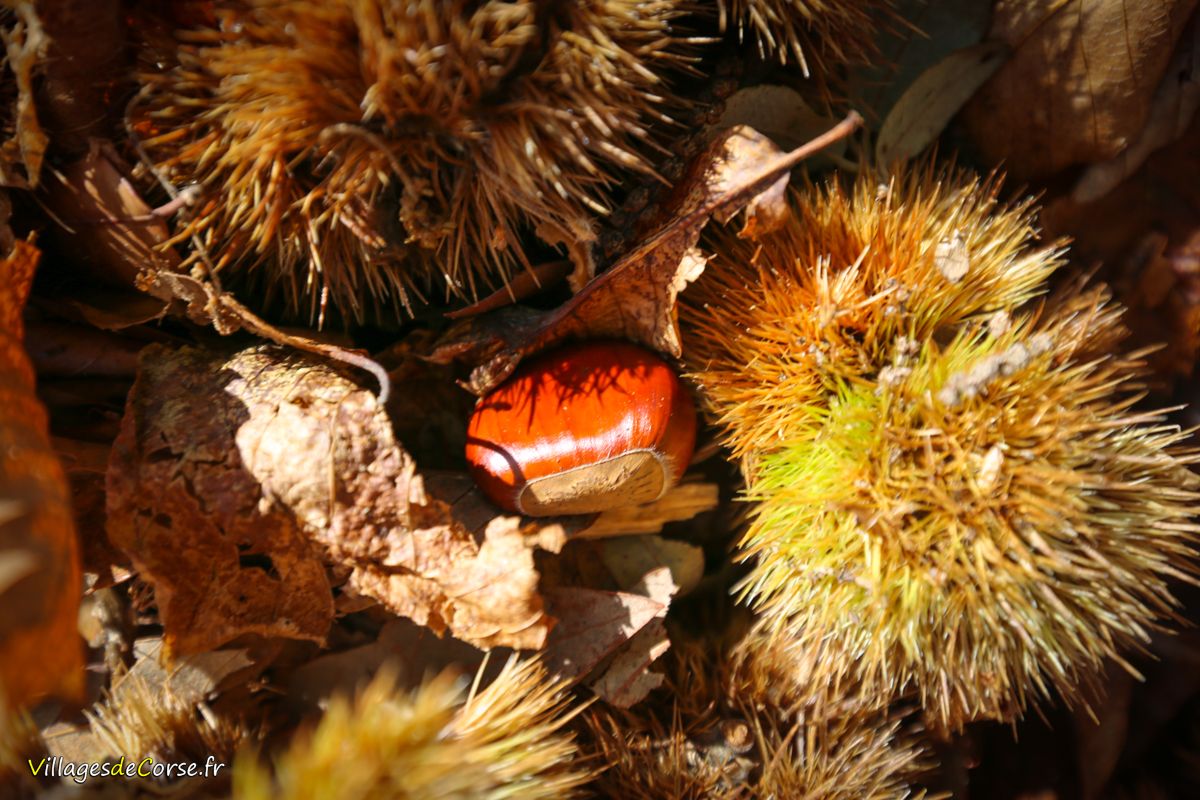
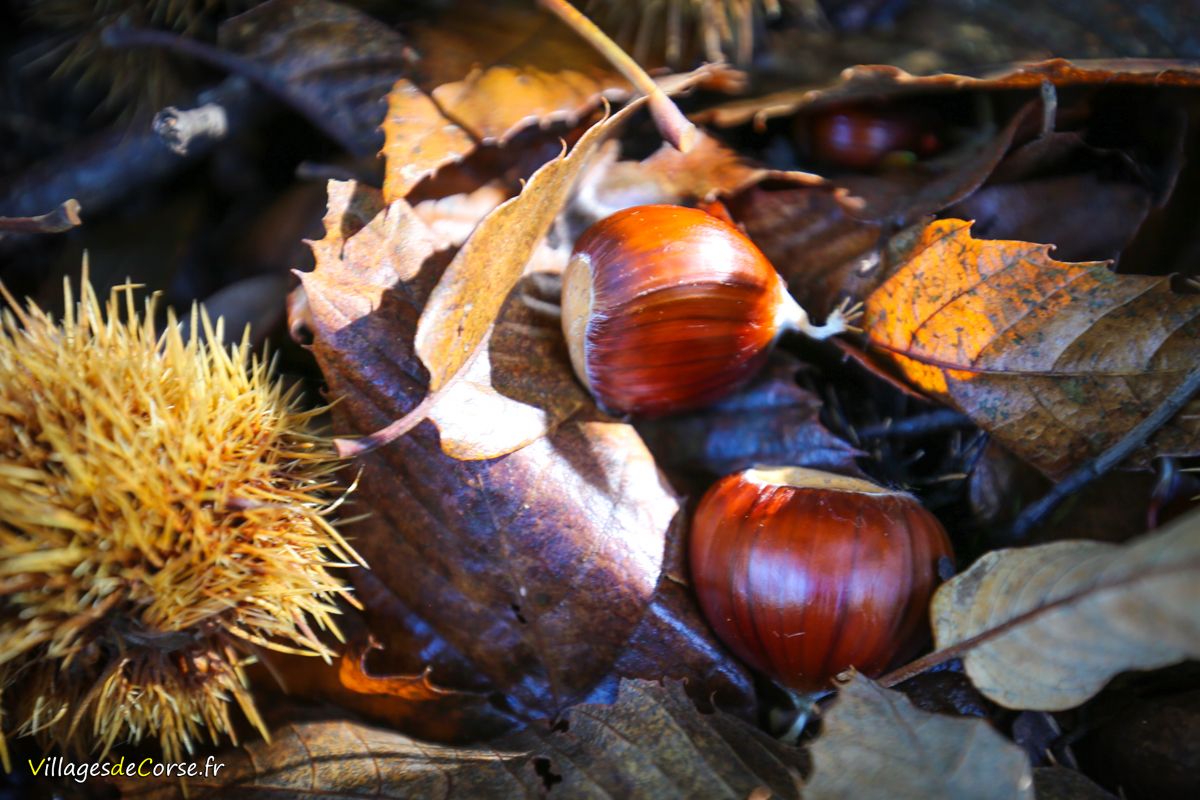
In Castagniccia and Nebbiu, in the Ajaccio region and in the Alta Rocca, chestnuts play an important role in both gastronomy and culture.
When to pick chestnuts in Corsica?
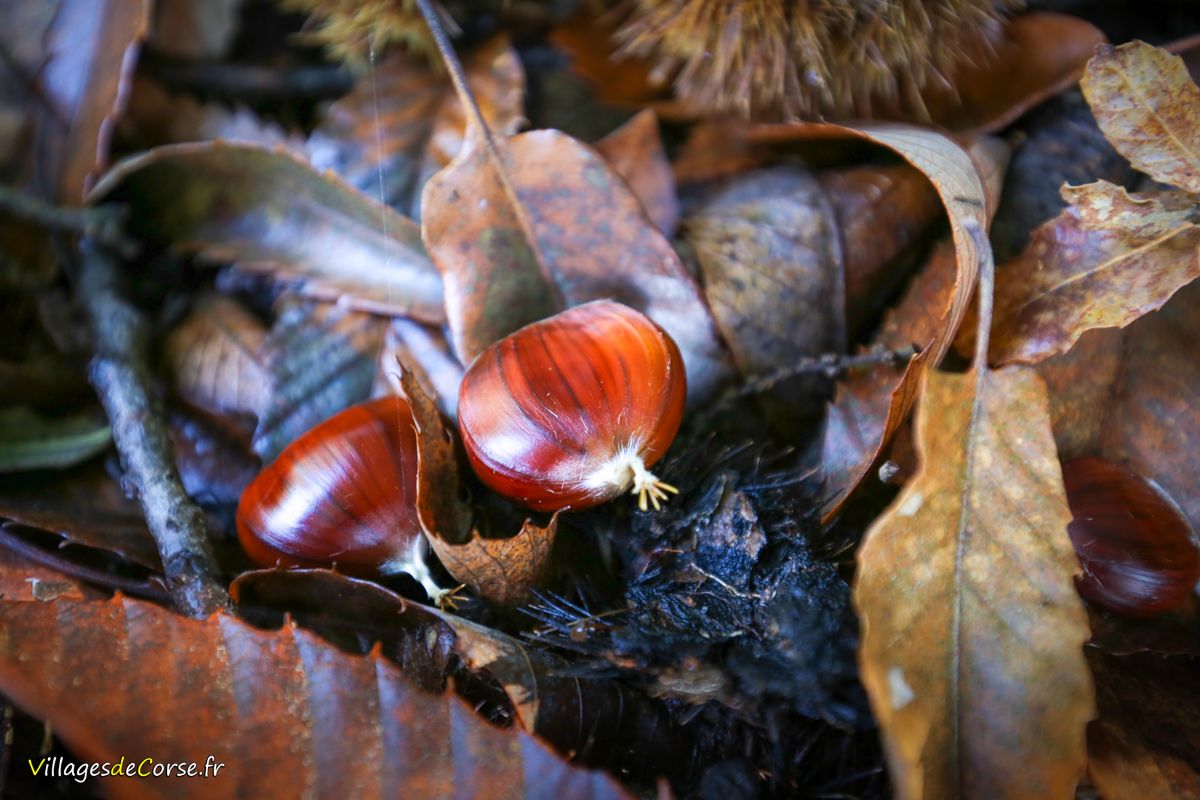
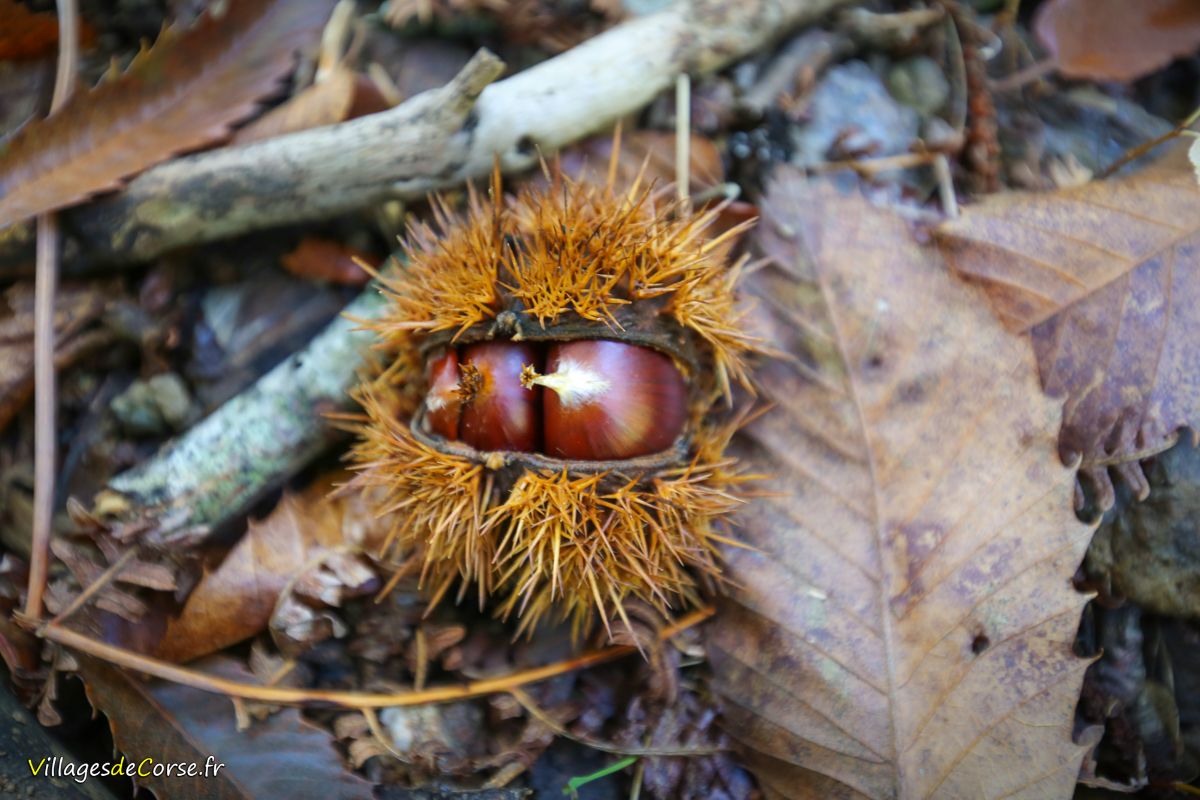
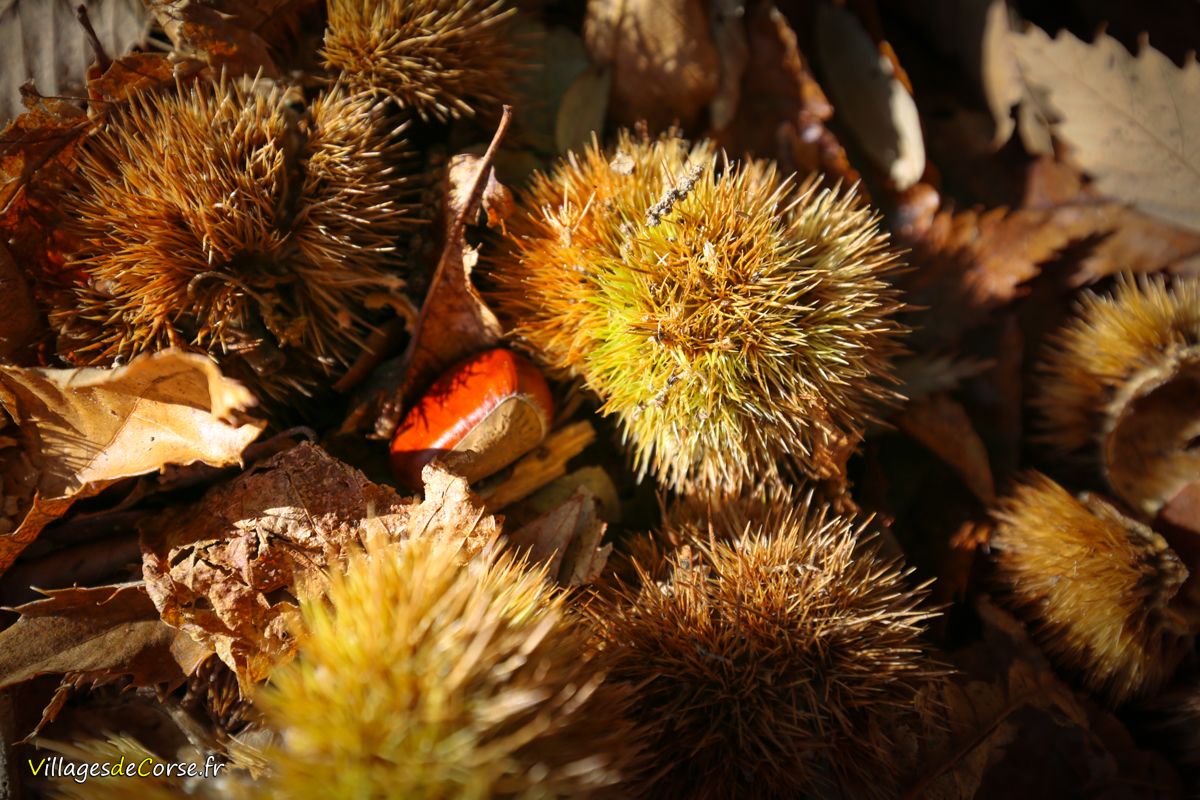
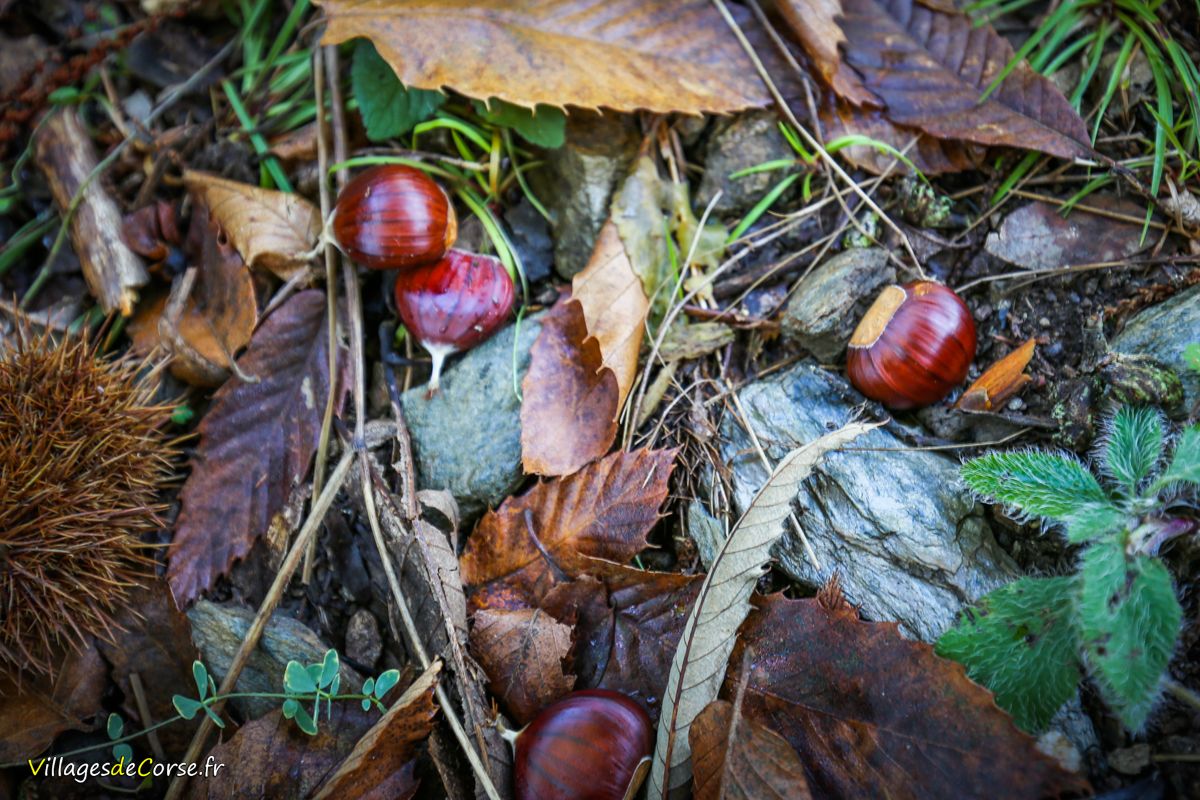
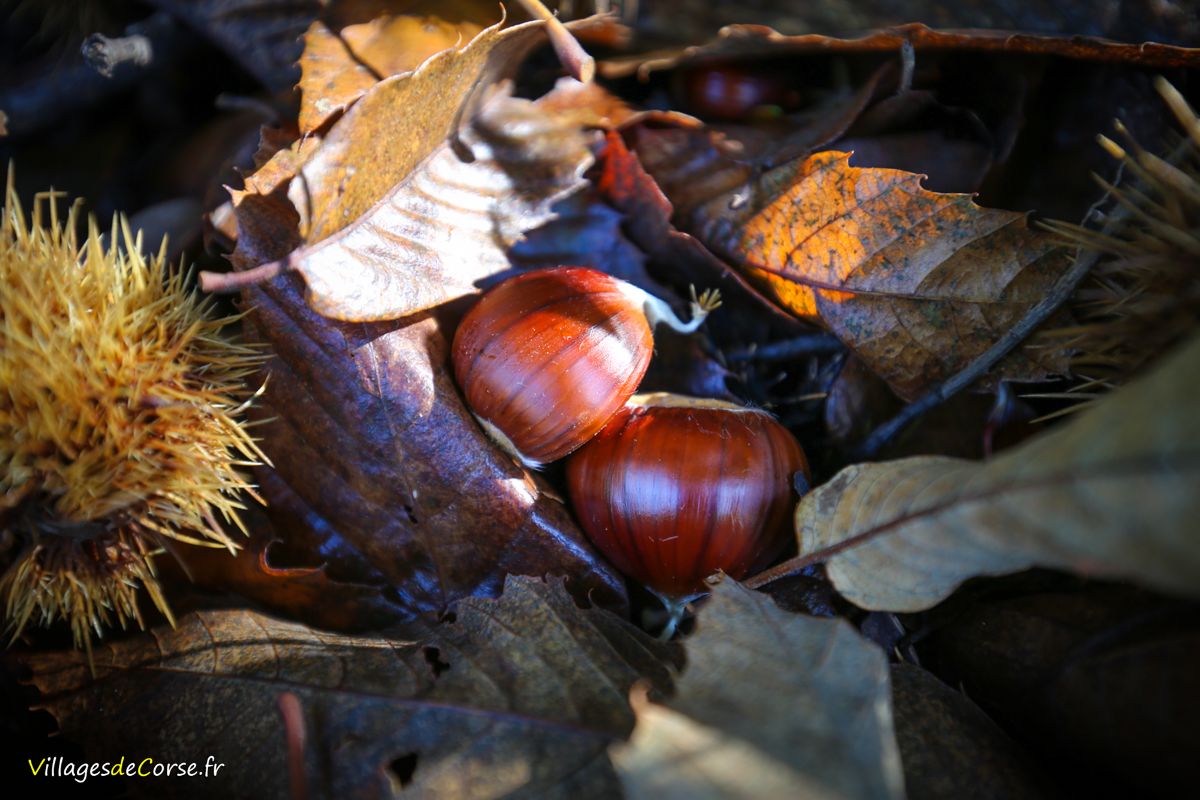
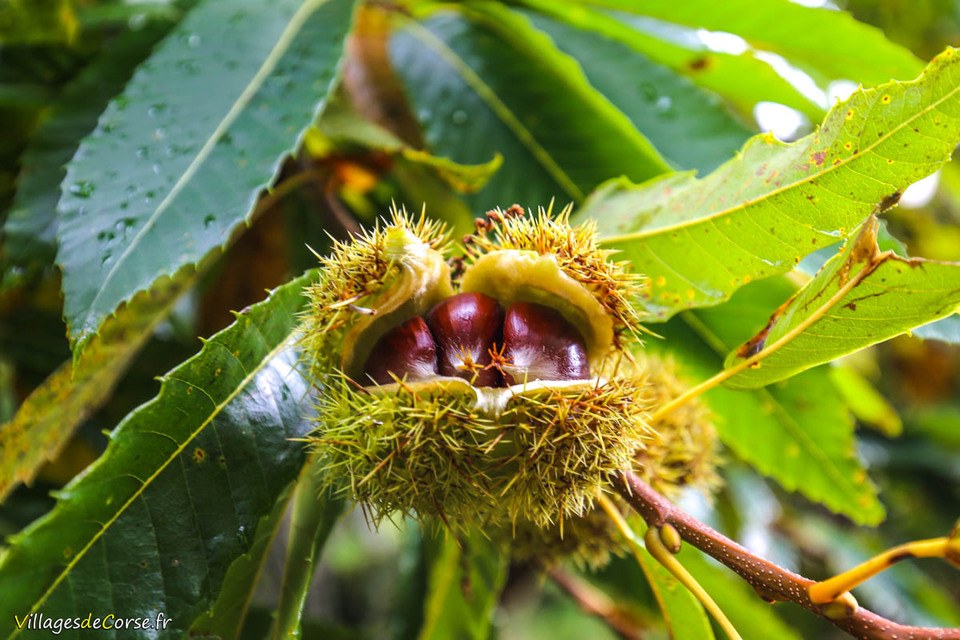
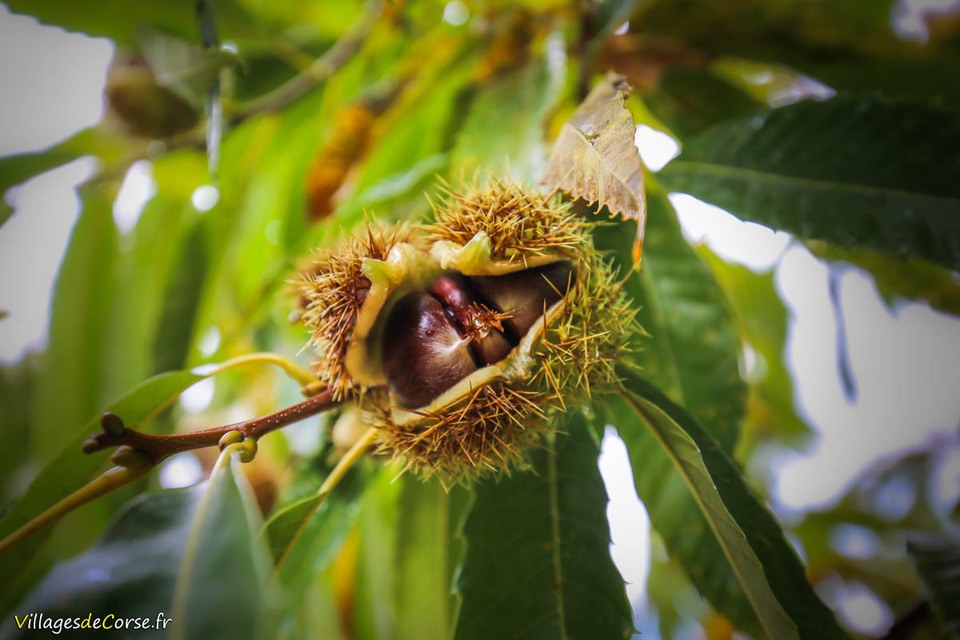
In October, as the days grow shorter, the chestnut trees turn brown and open up, revealing their first fruits. In Corsican chestnut groves, the silence gradually breaks: day and night, chestnuts - sometimes the whole bogue - fall and slip into a thick carpet of autumn leaves.
The chestnut-picking season lasts from mid-October to mid-November, with up to a week's delay depending on the weather. A rainy spring or, on the contrary, a too-hot summer, are all factors that affect the nature of the fruit, its size and its taste.
Recognizing a quality chestnut
Chestnuts at the beginning of the season are of the best quality, full to the touch and with a rounded fruit that sticks to the skin, unlike those at the end of the season, which have begun to lose water and shrink.
Avoid worms
Worm-eaten chestnuts are also more common at the end of the season, and can be identified by the presence of a hole (or several holes), testifying to a gallery dug by a worm, or rather the larva of a butterfly - the codling moth - which also attacks oak acorns.
This worm is present in many fruits, which it digs out and buries in the ground to hibernate. That's why, if you leave your chestnut basket on standby for a few days, you'll notice more and more chestnuts with holes and worms wandering around.
Where to find chestnuts in Corsica?
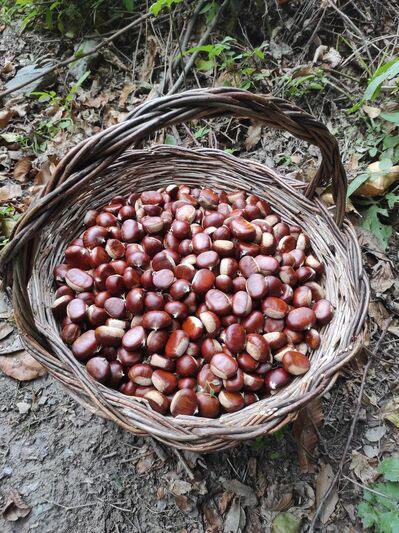
Most of the island's micro regions have extensive chestnut groves - not including private land, which is usually fenced in - and offer a variety of chestnut spots where you can "pick" the precious fruit.
Around Ajaccio in Cuttoli, in the Cruzini, the Deux Sorru, the Nebbiu, and of course Castagniccia - the chestnut-growing region par excellence - chestnuts can be picked along roadsides or hiking trails. There are far fewer in the far south, and in Balagne, apart from a few chestnut trees at altitudes of over 500 metres.
Chestnut harvesting essentials
If the terrain is steep, a soft fabric bag is ideal for picking chestnuts.
Once you've picked your chestnuts, you can cook them over an open fire, using the essentials: a chestnut pan, a lighter and a knife to pierce the chestnuts so they don't explode. Please note that forest fires are forbidden.
How to eat chestnuts
Chestnuts braised or cooked over a wood fire using a chestnut pan.
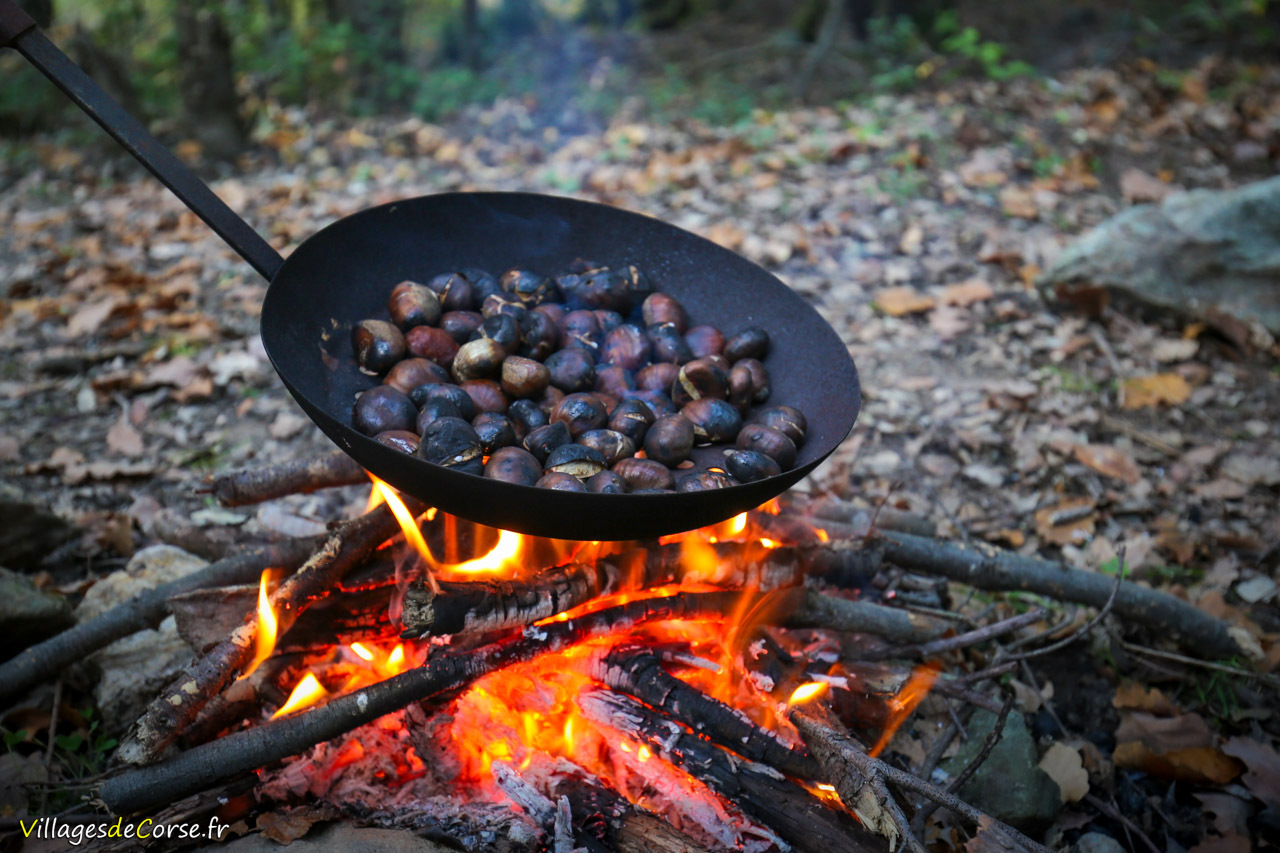
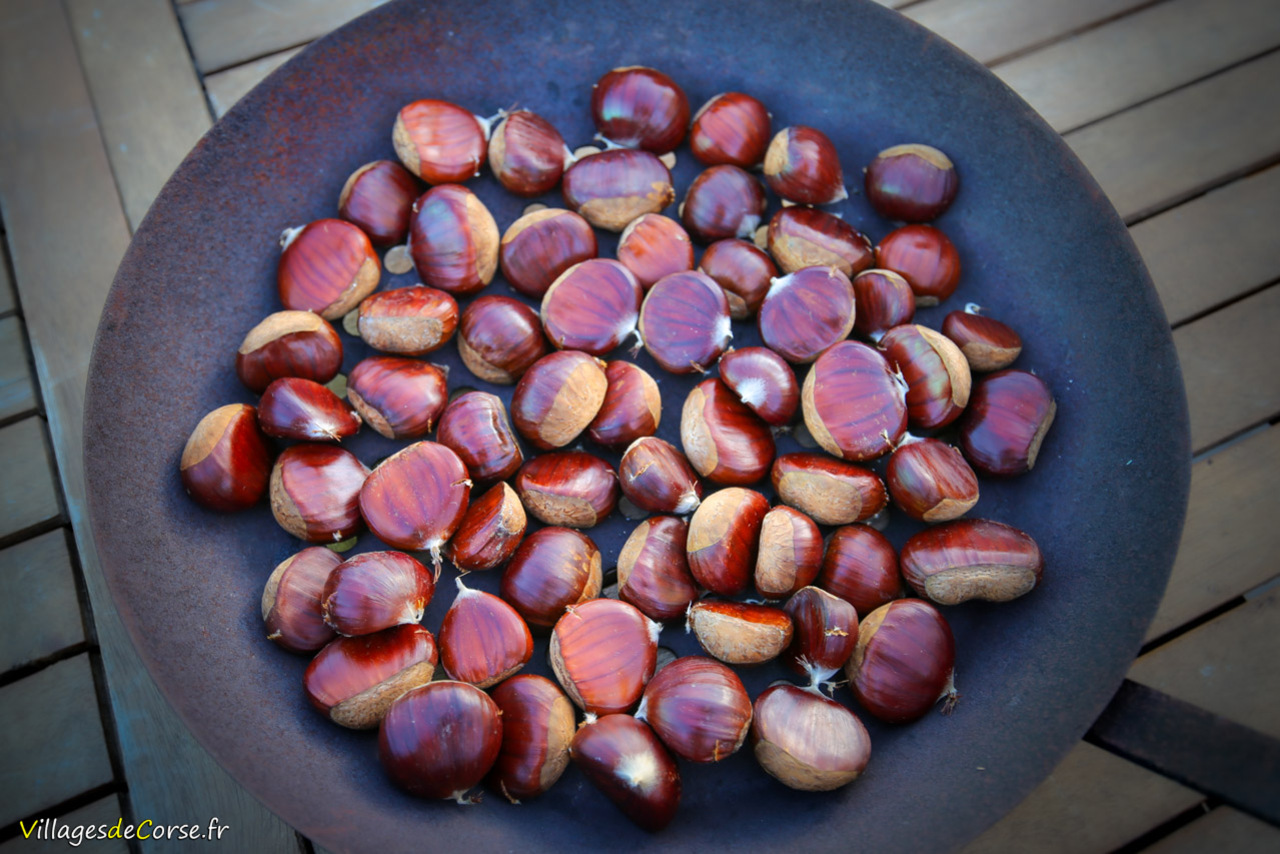
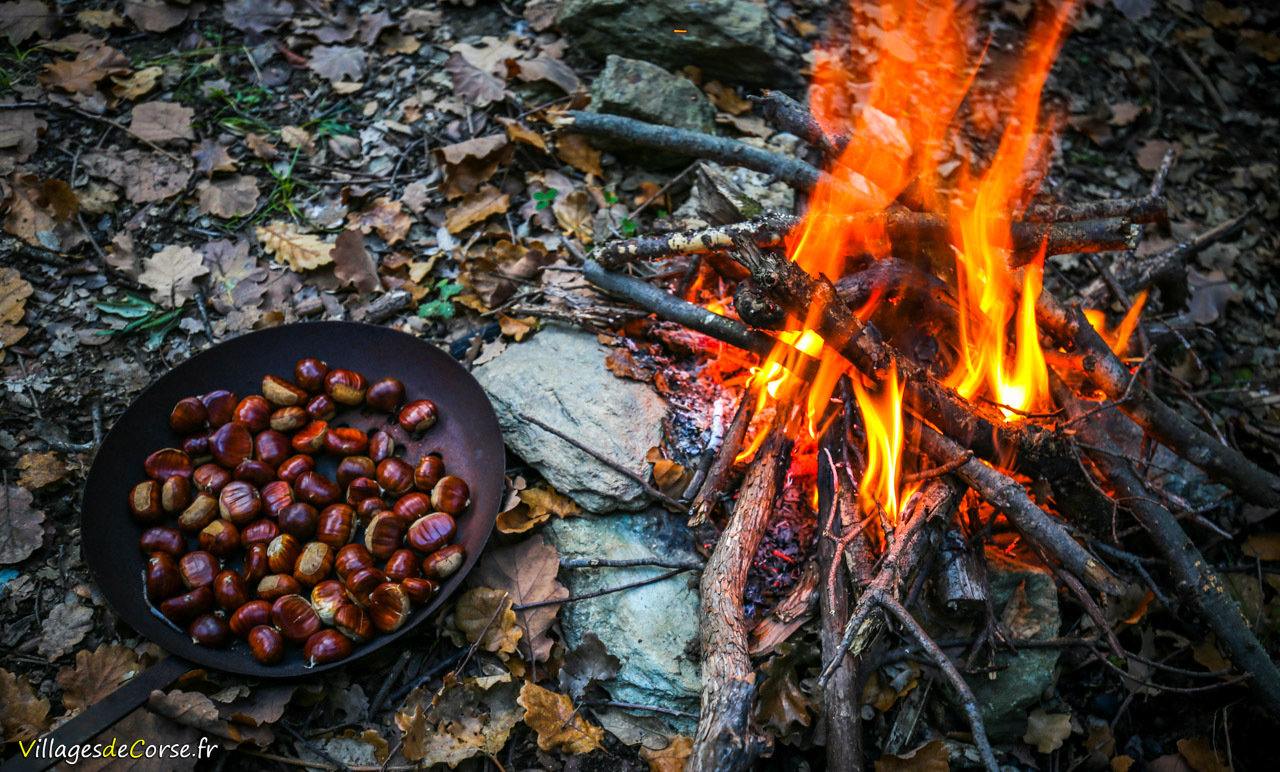
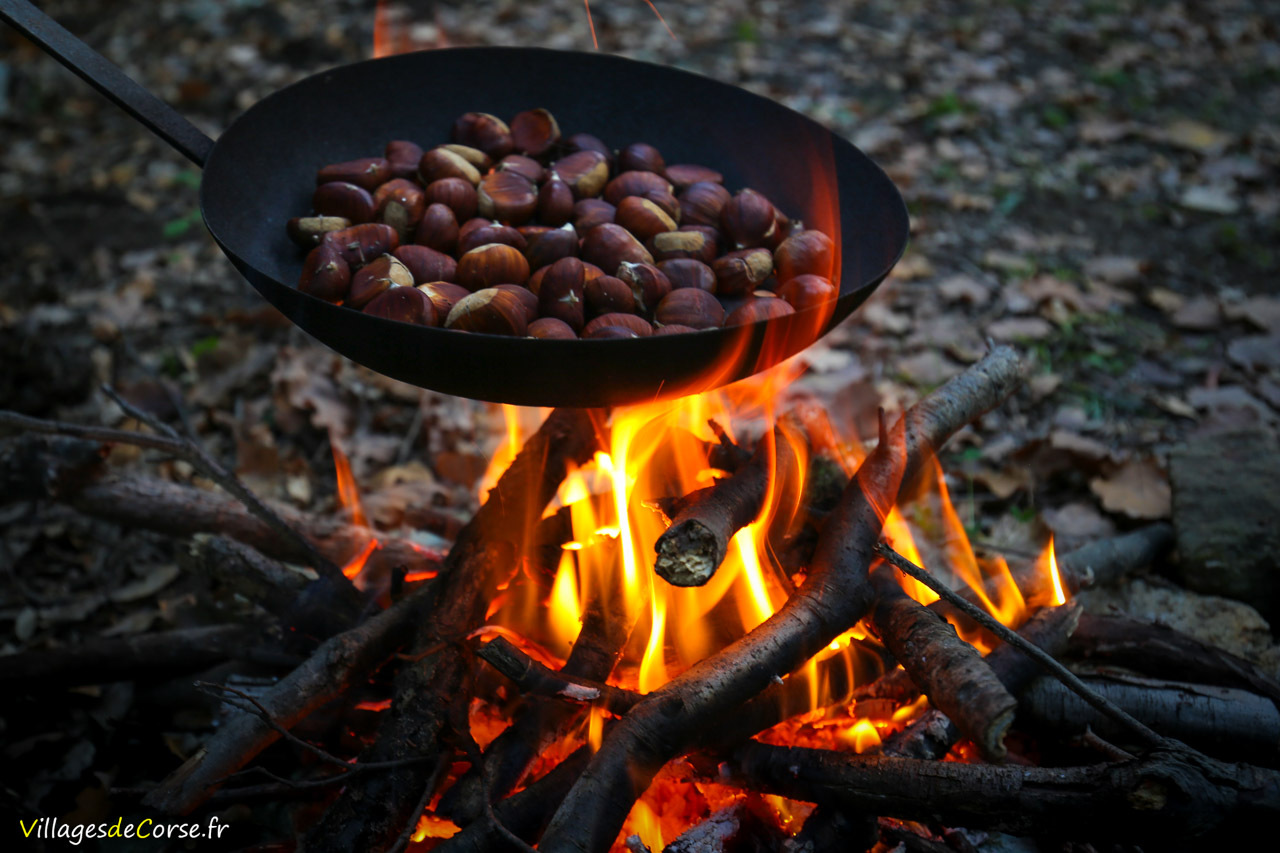
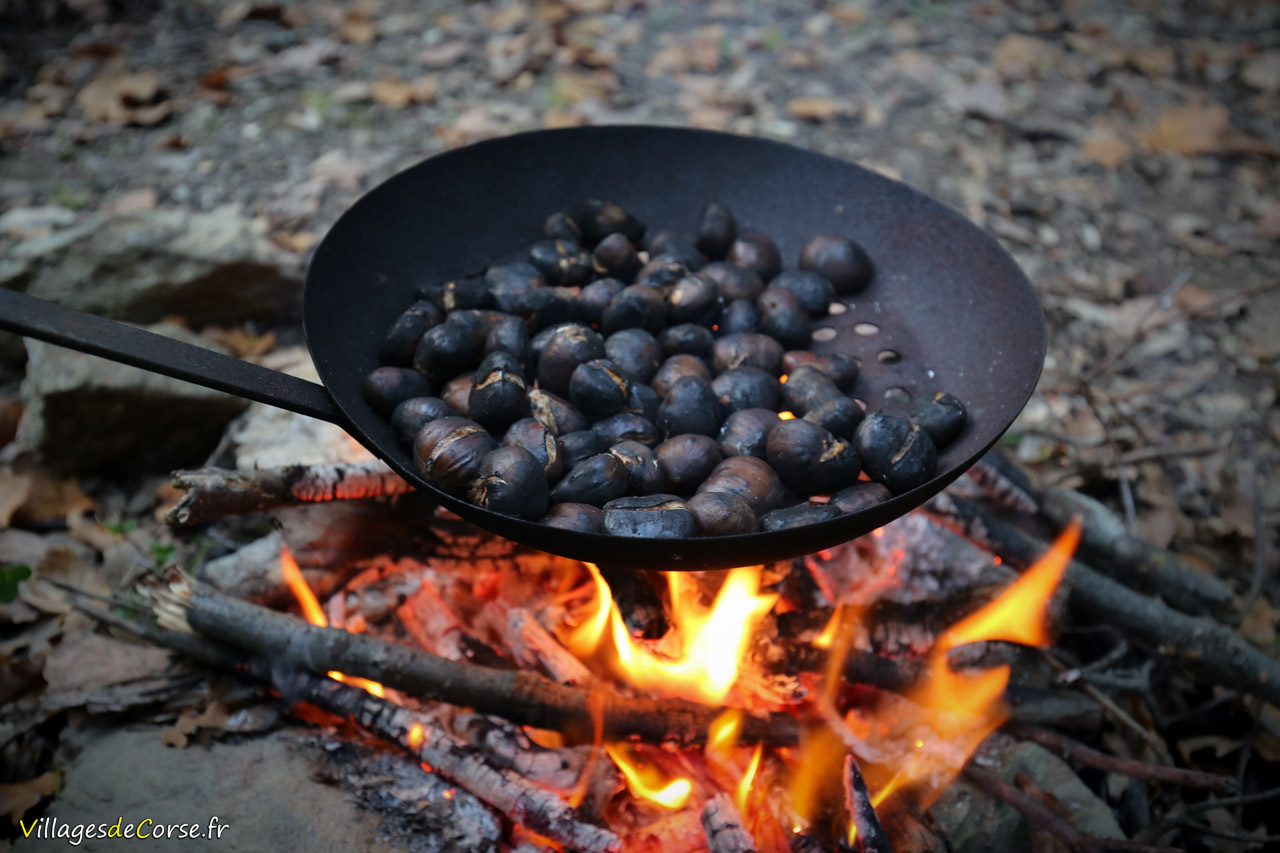
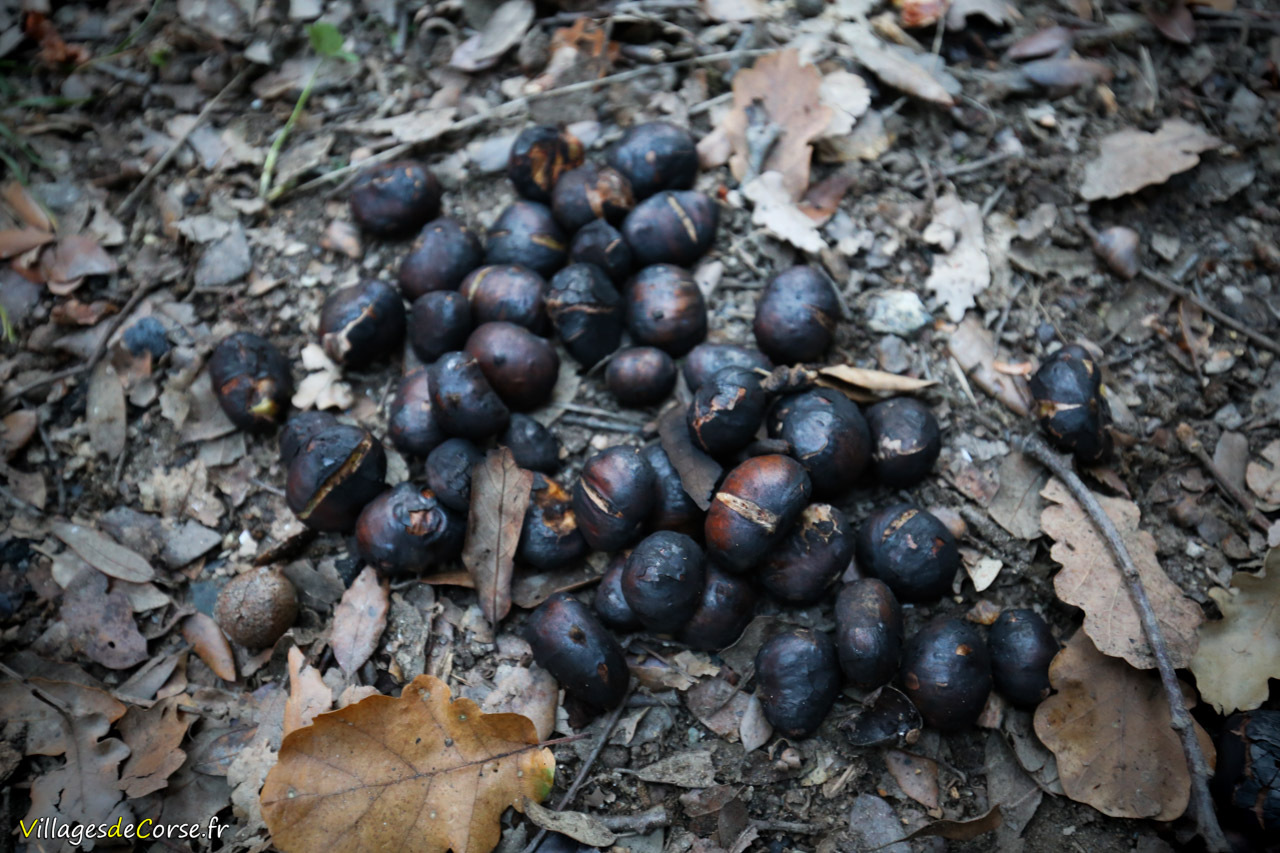
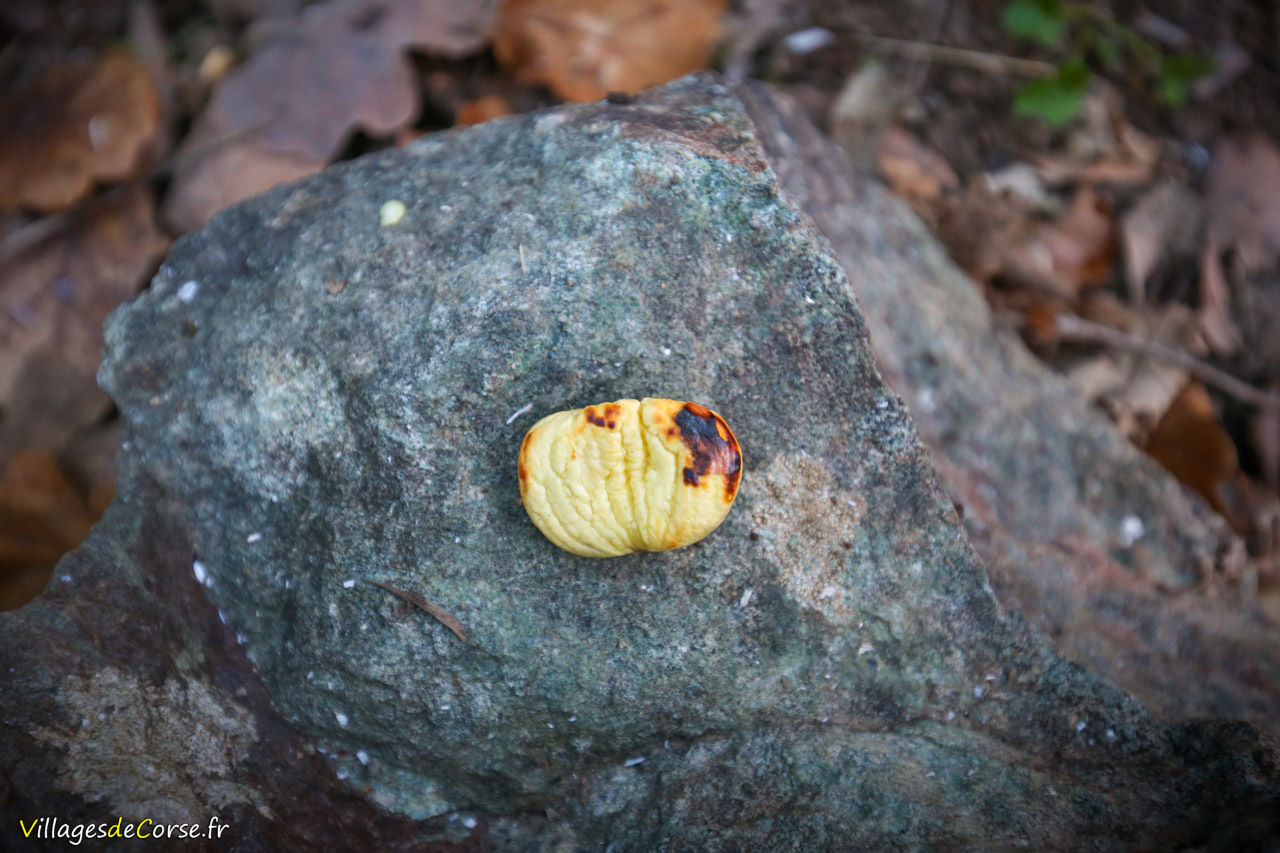
The most authentic way to enjoy chestnuts is to roast them over a wood fire, placing them directly on the embers. You can also use a chestnut pan, which you shake regularly to mix the chestnuts, and whose holes allow you to cook them quickly without burning them.
Baked or steamed chestnuts
Chestnuts can also be baked in the oven, with a small notch on each chestnut to prevent them from exploding. Preheat the oven to 180°, and leave to cook for around 15 minutes.
You can also steam or boil them in a pan of boiling water. This cooking method has the advantage of releasing the bark more easily.
Dried or raw chestnuts
For crudivores, chestnuts can be eaten raw, freshly picked, but will not be very digestible. The alternative would be to dry them, making them very hard and requiring patience and good teeth.
Chestnut flour
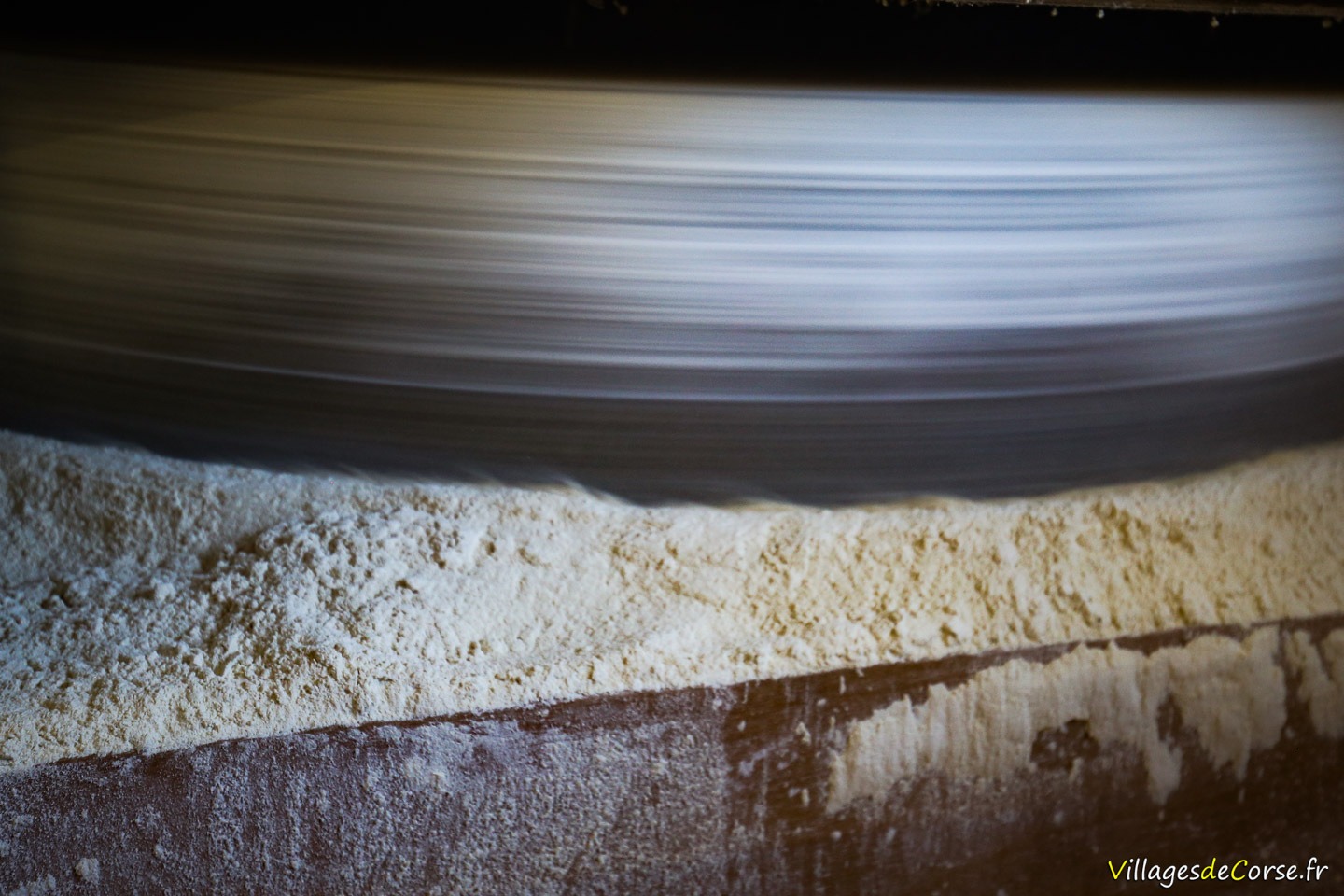
In Corsica, a large proportion of chestnuts are processed into flour. This traditional product is obtained after long drying of the fruit in driers, where a fire is kept burning for almost a month to remove the moisture.
The dried chestnuts are then shelled and ground in a chestnut mill to produce a fine, naturally sweet, gluten-free flour.
Discover how Corsican chestnut flour is made, its benefits and its producers.
Don't confuse chestnuts with marrons
Chestnuts come from a tree native to India and related to the chestnut tree. The bogue is round and thorny, and contains just one fruit, whereas the chestnut bogue contains 3 or 4. The major difference between the two is that the chestnut is poisonous, and therefore inedible. In other respects, the chestnut is larger, more rounded and lacks the little tail that chestnuts have.
Warm chestnuts?
On the mainland, in mountainous regions, roasted chestnut vendors are often heard on winter evenings shouting "Chauds marrons! In truth, the name is a misnomer: these are chestnuts, not marrons. It's because the largest of the latter are selected that they resemble chestnuts.
Chestnuts: the Corsican breadfruit tree
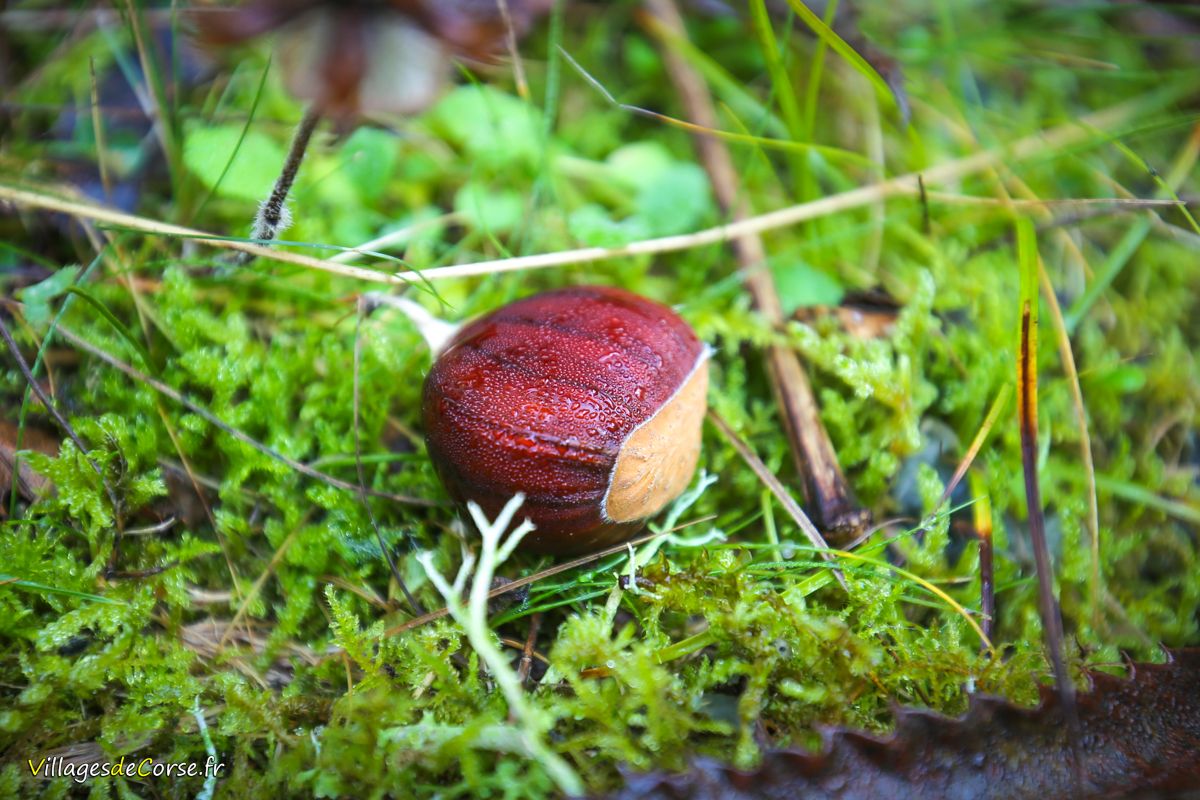
Corsica has a close relationship with its chestnut groves, which have enabled it to survive in times of crisis as well as war, and have given a region the name Castagniccia, derived directly from the Corsican word for chestnut (a castagna).
Today, with over 20,000 hectares of chestnut groves spread across the entire territory (to a lesser extent in the far south, Cap Corse and Balagne), Corsica has not always been a land of castaneiculture. Although endemic to the island, the chestnut tree does not thrive easily in the face of competition from scrubland or other trees, or the passage of animals. Unlike oak, whose forests are self-regenerating, there would be no chestnut groves as we know them, without human intervention.
A thousand-year-old culture
Chestnut cultivation dates back to the Roman Empire, before the Genoese centuries later made it a priority to turn chestnuts into an export product. In the 19th century, the island's chestnut groves were almost twice as large as they are today.
Plagued by cynips (a parasite native to China) for some years now, chestnut trees are part of a heritage that is as precious as it is vulnerable, hence the value placed on them on the island. Every year, Bocognano hosts a very popular chestnut fair, a fiera di a Castagna.
Chestnut tree characteristics
A majestic deciduous tree, the chestnut can live up to 500 years, with a trunk that can exceed 5 meters in diameter and reach heights of up to 30 meters. On the other hand, it takes around fifty years for a young plant to bear fruit, so much so that a Corsican proverb says that he who plants a chestnut tree will not eat its fruit.
Chestnut wood
Chestnut trees were also exploited for their noble wood, which was widely used to make Corsican furniture and structural beams. Chestnut wood was also used for heating.